Fixed-tilt vs single-axis tracking: which one works for agrivoltaics
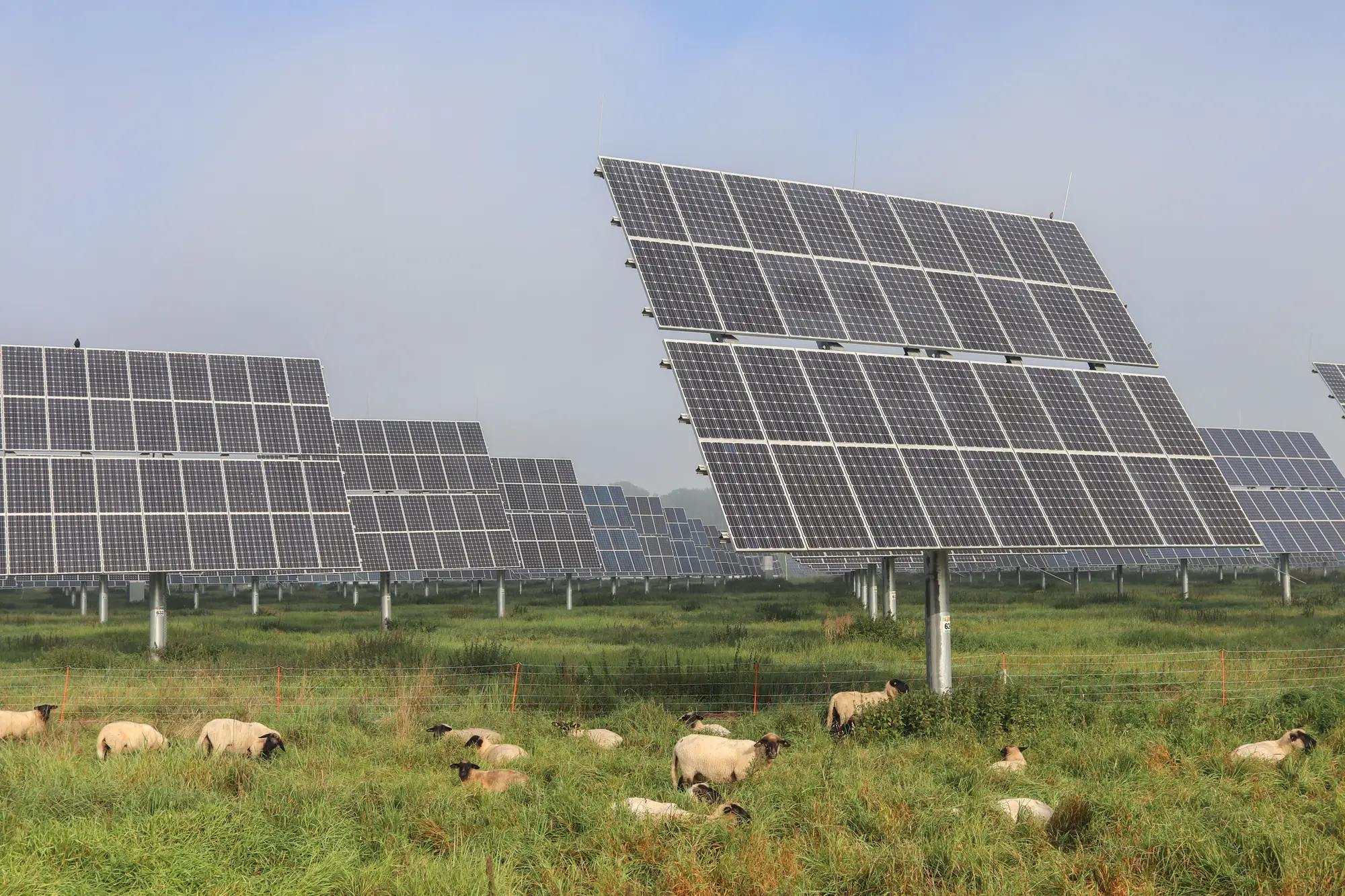
Most of the fixed-tilt-versus-tracker debate gets framed as an energy question. For a dual-use parcel, that's the wrong question. The racking decision is really a clearance and row-spacing decision, and it gets made by whatever equipment the farmer or grazier still needs to run through that field every season.
What the equipment needs
Fixed-tilt racking sits at a set angle, year-round. Posts are shorter, the structure is simpler, and there's no torque tube or motor to clear during rotation. That makes it a reasonable fit for grazing operations and pasture-based dual-use, where the main constraint is sheep or cattle moving under and around the array rather than a piece of machinery with a 12-foot header.
Row crops change the math. A combine, a baler, a high-clearance sprayer boom: each has a working height and a turning radius, and the clearance that matters is the lowest point the array ever reaches, including mid-rotation on a tracker. Single-axis trackers rotate through the day, which means the lowest edge of the panel sweeps lower than its resting position at certain sun angles. Agrivoltaic-specific tracker builds can be ordered with taller posts to keep that lowest sweep point above equipment height, and that taller-post spec has to be requested for the site; standard tracker SKUs default to utility-scale post heights. If a developer specs a standard utility-scale tracker and drops it onto a parcel that's still being farmed for row crops, the clearance math usually doesn't work.
Row spacing eats into usable width either way
Trackers also tend to need wider east-west spacing than fixed-tilt to avoid self-shading as the rows rotate. That wider spacing can work in the farmer's favor, since it opens up more room between rows for equipment passes, but it also means fewer rows per acre and a different yield math for the ground lease than a developer modeling the parcel as straight rooftop-style tracker capacity.
Fixed-tilt rows, by contrast, hold a fixed spacing year-round. That's easier to plan a planting pattern around because the shade line doesn't move the way it does under a tracker, but it also means the shade pattern is locked in one place all season, which matters more for some crops than others.
Racking choice for dual-use parcels: start from the crop, not the rack
A hay operation with low equipment height and tolerance for partial shade is a different parcel than a vegetable operation running tractors with tall cab heights and tight row tolerances. The racking type that pencils out for one is often the wrong call for the other on the same acreage.
This is where the argument between a developer and a co-op usually stalls. The developer is looking at a site plan built around tracker output and standard post heights. The co-op is looking at what's actually driven through that field for the last ten years and what it would take to keep doing that. Both sides are right about their own numbers and still disagreeing, because they're working from two different starting points on the same parcel.
A candidate parcel map built from crop type, parcel geometry and yield history gives both sides the same starting point before anyone commits to a racking vendor. It shows which fields on a given parcel can take the clearance a tracker needs, and which ones are better suited to fixed-tilt or grazing, before the design gets drawn. The tracker SKU itself is still a decision for the engineering team downstream.
If you're sitting across the table from a co-op trying to settle this before it turns into a redesign, that's the parcel-level starting point worth getting to first.