Sizing row spacing to combine header width in an agrivoltaic array
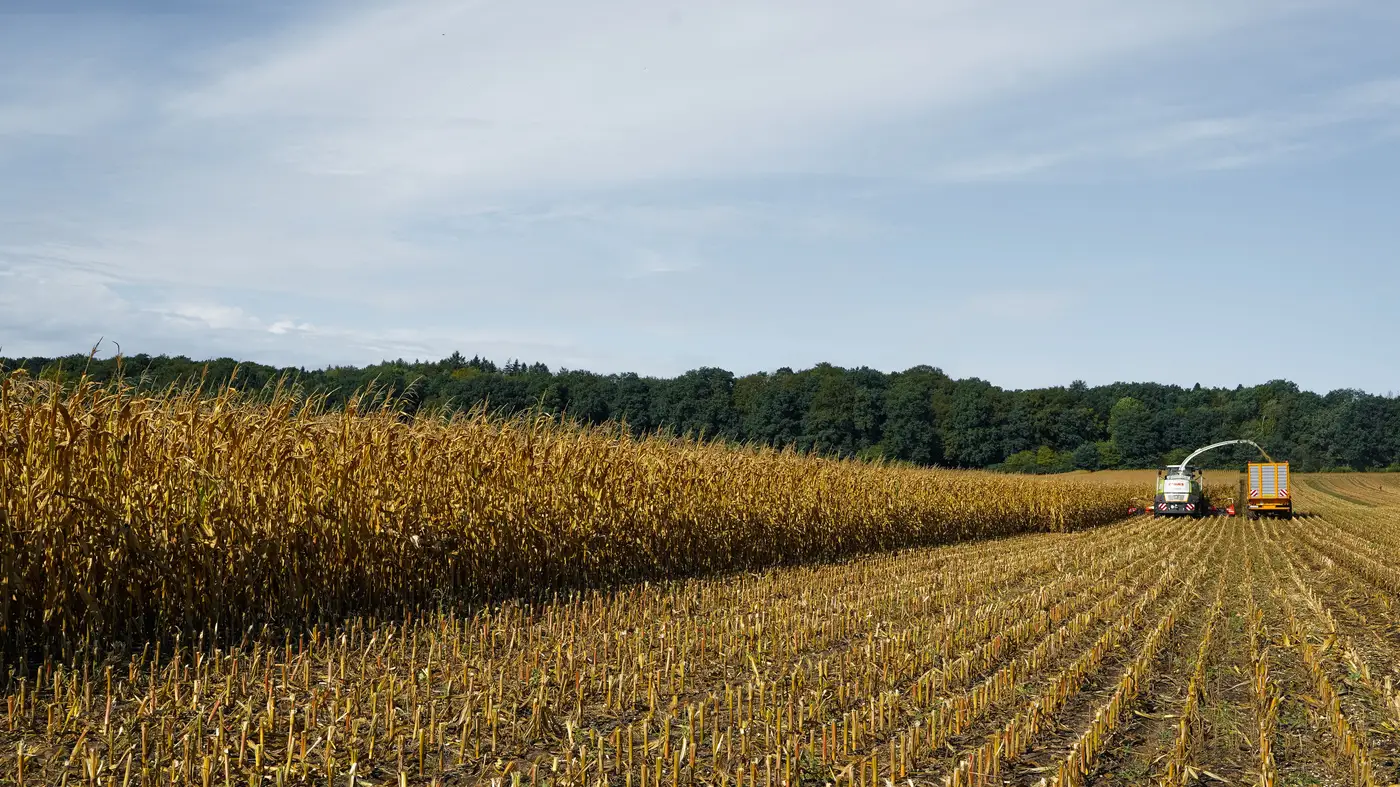
Row spacing arguments usually start the same way: the developer's racking drawing shows a pier spacing that looks fine on paper, and the farmer who's run a combine down that field knows it isn't. Get this wrong and you're not looking at a minor inconvenience. You're looking at a grower who can't get a 40-foot header through the rows without backing up every other pass, or worse, clipping a torque tube.
Start with the header, not the panel
The header width is the number that should set your row spacing, not the other way around. Corn headers commonly run 30, 35, 40, or 45 feet. Soybean platforms are often wider, 40 to 45 feet being standard on a lot of Midwest operations now. The measured width on the spec sheet is usually the cutting width, outside row unit to outside row unit, and it doesn't include the frame extensions or the folding wing hinges that stick out another foot or so on each end when the header's unfolded for transport turns at the row end.
So the working number is cutting width plus a few feet of hardware clearance, and then a buffer on top of that for driver error, because nobody drives a header dead center down a row all day without drift. Growers we've talked to through co-op partners generally want at least a couple feet of slop built in beyond the bare equipment width before they'll sign off on a layout. Less than that and every pass becomes a white-knuckle exercise, and that's before you account for uneven ground pushing the header off line.
What row spacing needs to clear
Row spacing on an agrivoltaic site is the gap between the lowest leading edge of the panel at its steepest tilt angle and whatever's rolling underneath it, sized to the full header width plus the headland turn space at the end of the row. A single-axis tracker at full morning or evening tilt can drop its leading edge several feet lower than its stowed height. Design clearance off that tilted figure, because the rack is tracking the sun, not parked flat, when a combine is likely to pass under it.
The headland is the part people forget. A combine doesn't stop dead at the row end and reverse. It needs room to lift the header, swing, and square up for the next pass, and that turning radius eats into whatever row length you thought you had. A 40-foot header on a combine with a long wheelbase can need 30-plus feet of headland depending on the turn style, and if the array's perimeter rows run right up against that space, you've effectively shortened every pass in the field by however much room the turn takes.
None of this is something you can eyeball off a county parcel map or a satellite image zoomed out to the township level. It takes parcel-level geometry: the actual shape of the field, where the existing crop rows run relative to the property line, and what the yield history says about which parts of the parcel are worth protecting access to in the first place. That's the layer a candidate parcel map built from crop type, parcel geometry, and yield history is meant to add before anyone's standing in the field arguing about it.
Where the mismatch shows up
The failure mode is rarely the whole field. It's usually one corner, where the parcel pinches down or a drainage ditch cuts the headland shorter than the rest of the site, and that's exactly where a layout drawn to average spacing across the whole parcel runs into trouble. A row spacing that clears a 40-foot header everywhere else can still pinch a combine in a tight corner if nobody flagged that section separately.
If you're bringing a layout to a co-op board or a grower partner, the row spacing conversation goes faster when both sides are looking at the same parcel, not a satellite photo on one side and a racking drawing on the other. Agrisolar Siting exists to get everyone on that same page before the argument starts, not after.