Shade-tolerant crops under solar panels: a siting guide
Every agrivoltaic pitch eventually hits the same question from the grower's side of the table: what can grow under this thing? It's a fair question, and it comes before the lease conversation, not after. If the crop plan doesn't pencil, the parcel doesn't either.
Light levels under a tracker array
A fixed-tilt or single-axis array doesn't block light evenly. Rows nearest the panel edge see heavier shading, the interrows get dappled light that shifts through the day, and the exact percentage depends on panel height, row spacing, and tilt angle. Growers working under existing agrivoltaic installs generally describe interrow light as somewhere in the range of a third to half of full sun, with real variation by season and array design. That still rules out a lot of row crops outright.
Corn, soybeans, and wheat want full sun for most of the season. Push them under a 6-foot-high fixed array and yield drops fast enough that the lease rate has to carry the whole deal, which is a hard sell to a co-op board. The crops that hold up are the ones bred for understory conditions, or ones where the farmer's getting paid for something other than peak tonnage.
Crops that tolerate the shade
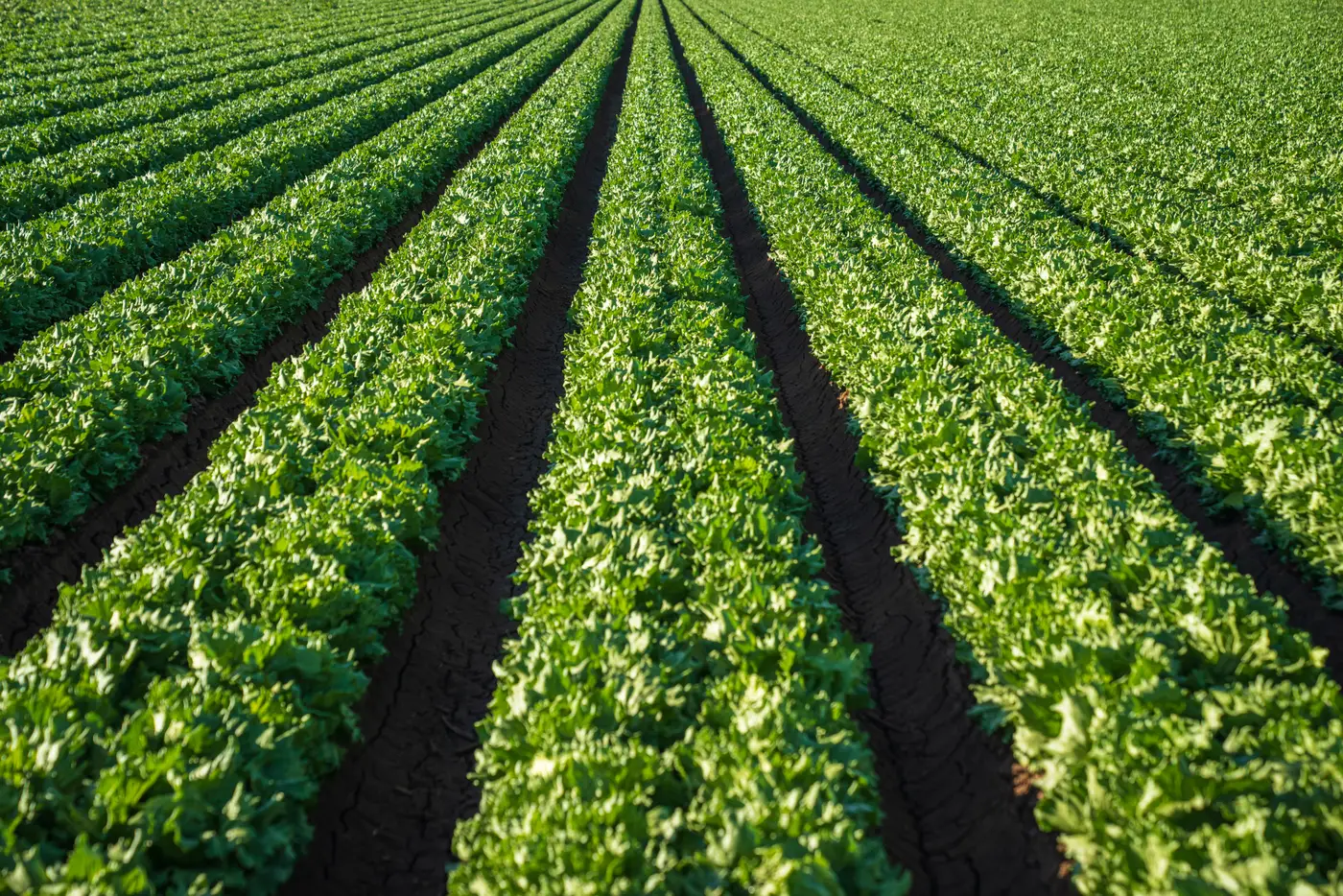
Leafy greens are the obvious starting point. Lettuce, spinach, chard, and kale bolt less and hold quality longer when they're not baking in August sun, and several university field trials have shown them doing fine or even better under partial shade compared to open field. Brassicas generally track the same way.
Berries are the other strong candidate. Strawberries in particular seem to tolerate the dappled light well, and the afternoon shade can reduce heat stress on fruit. Some developers are pairing panel rows with cane berries for the same reason.
Forage and pasture are the quiet workhorse of agrivoltaics, and they're worth taking seriously even though they don't photograph as well as a lettuce trial. Cool-season grasses and clover tolerate shade better than most row crops, and sheep grazing under a tracker array sidesteps the shade question almost entirely since the animal doesn't care about light the way a plant does. It's also the use case with the fewest moving parts for a co-op board to approve, because nobody's betting the lease on a novel crop trial.
Root crops sit in the middle. Carrots, beets, and potatoes can take partial shade, but yield and size tend to drop more than with leafy greens, so the economics depend heavily on what the grower was planting there anyway.
None of this is a universal ranking. A crop that works under a 4-foot low-profile array in a co-op's current rotation might not work under an 8-foot tracker array three counties over with different soil and a different growing season. That's a parcel-by-parcel question, and it's exactly where a developer and a co-op tend to show up with two different maps and no shared answer.
That's the gap a candidate parcel map built from crop type, parcel geometry, and yield history is meant to close. Instead of guessing which fields could plausibly carry a shade-tolerant crop alongside a dual-use array, it starts from what's been planted there and how it's yielded, season over season, and narrows the list before anyone's out walking fields.
If your team is sorting real candidate parcels from a long list of maybes, that's the problem Agrisolar Siting is built to work on.