What is a decommissioning bond, and why does a farmland solar lease need one?
A decommissioning bond is money set aside, usually through a surety bond or letter of credit, to pay for tearing out a solar array and putting the land back to a usable condition if the project ever shuts down early, goes bankrupt, or just reaches the end of its life and nobody wants to renew the lease. The developer posts it. The county or the landowner holds the right to draw on it. Nobody's hoping to use it, but every farmland solar lease that's worth signing has one written into the terms.
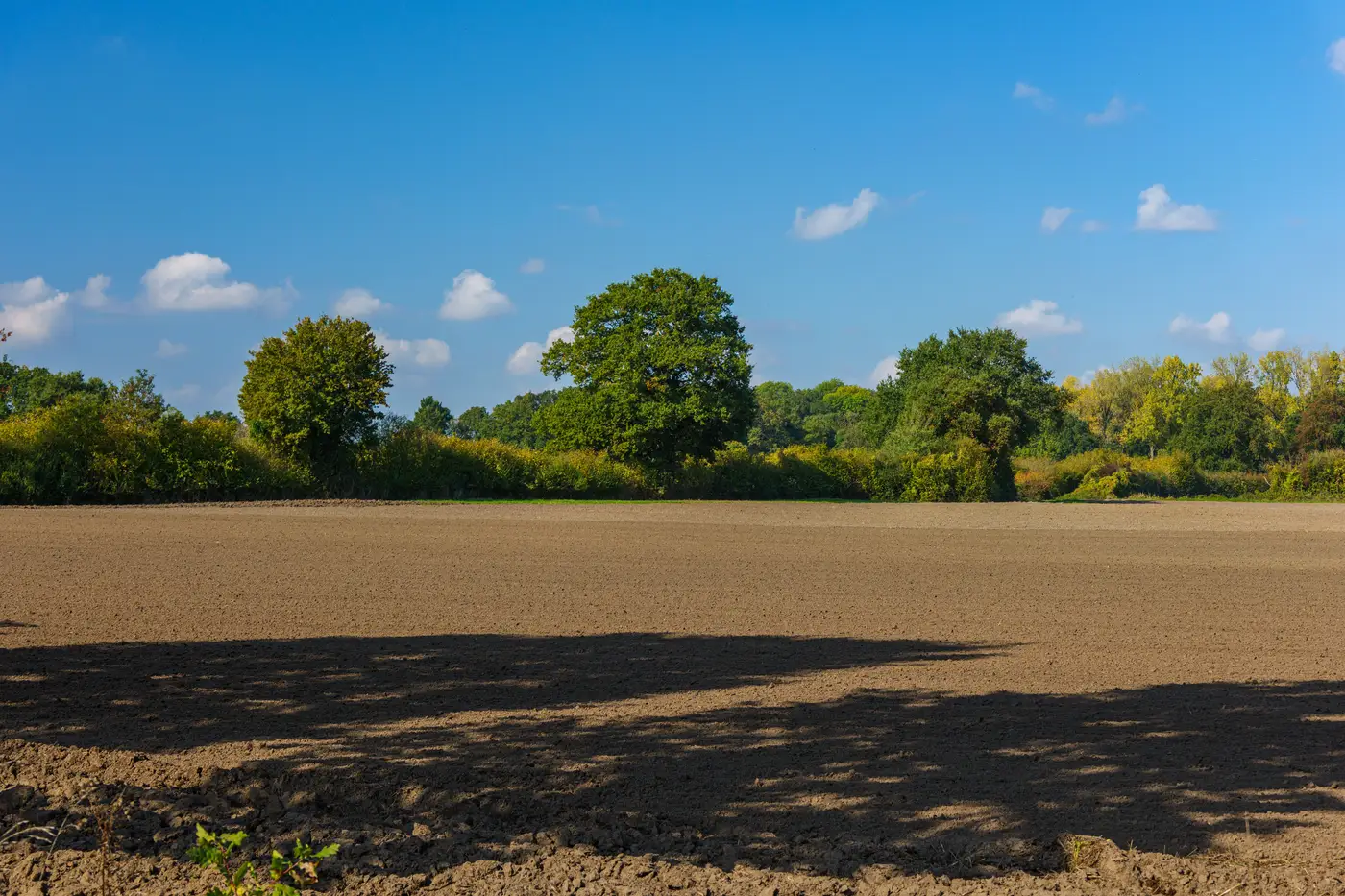
Here's why it matters more on cropland than on a rooftop or a brownfield: the land underneath has to go back to work. A landowner leasing out forty acres for twenty-five years isn't just renting space, they're betting that the field comes back as a field. If the operator walks away, or the LLC holding the lease dissolves, someone has to pull panels, pull racking, pull underground cable, and deal with concrete footings and any drainage tile that got cut during construction. That's not cheap, and it's not optional cleanup. Without a bond, that cost lands on the landowner or the county, not on whoever made the money running the array.
What the bond is supposed to cover
A decommissioning bond should be sized to the salvage-adjusted cost of removal, not the rounded-off number that shows up first in a lease draft. That means:
- Removing panels, inverters, racking, and transformers
- Pulling underground and above-ground cabling
- Removing or capping concrete pads and pile foundations
- Regrading and decompacting soil disturbed during construction and removal
- Restoring drainage tile that was rerouted or capped
- Reseeding or re-establishing topsoil where equipment pads or access roads sat
Some leases net this against expected scrap value of the aluminum, copper, and steel coming out of the ground. That's a reasonable way to size the bond. The assumption belongs in writing, and the lease should call for a recheck every few years, since the lease itself may run two or three decades.
Solar lease decommissioning requirements, in practice
Most county conditional use permits for solar now require a decommissioning plan as a condition of approval, separate from whatever the lease itself says. The plan usually has to specify the removal method, an estimated cost (often from a third-party engineer, not the developer's own number), and a bonding mechanism, typically a surety bond, a letter of credit, or an escrow account funded on a schedule.
The gap worth watching for: a county's permit conditions and the farmland lease itself don't always match. A permit might require a bond at commissioning, but the lease is silent on what happens if the bond lapses, if the posted amount falls short of real costs after inflation, or if the project changes hands mid-lease to a different operator who didn't post the original bond. A co-op negotiating on behalf of member-landowners should ask who re-evaluates the bond amount, on what schedule, and whether it steps up automatically or needs a renegotiation every time.
Farmland lease bonding and dual-use sites
Bonding gets more complicated on a dual-use agrivoltaic site where cropping continues under or between the rows. Removal has to account for active farm equipment access during the array's life. Restoration language should name what's supposed to go back in the ground, row crop, forage, grazing, and define what pre-construction condition means for that particular soil type, since a generic restore-to-pre-construction clause leaves that undefined.
That's a separate conversation from where the array should sit in the first place, which is the question a developer and a co-op usually argue about before bonding even comes up. If you're trying to settle which fields can actually carry both the lease and the crop without a parcel-by-parcel fight, that's the sorting problem our candidate parcel maps are built to shortcut.
Get the siting question answered first, then the bonding conversation has an actual field to attach to.